And for My Next Trick I’ll Forget What: A Designer’s Review
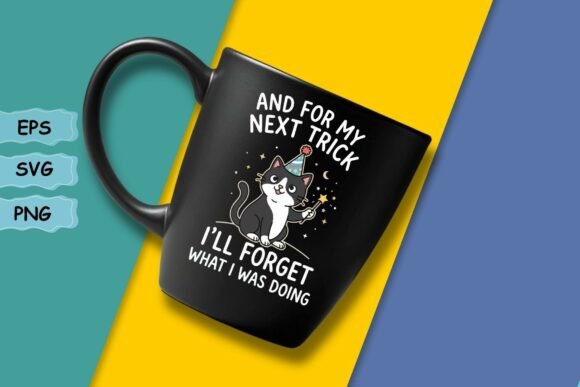
As someone who spends more time staring at stitch simulations than actual daylight, I have learned that the difference between a great handmade product and a disappointing return often lies in the choice of the machine embroidery design. Today, I am putting And for My Next Trick I’ll Forget What under the microscope. This isn't just another cute cat graphic; it is a potential asset for your craft business, your Etsy shop, or your personal gift list. Before you download the ZIP file containing the EPS, SVG, and PNG formats, let's talk about how this specific Graphics piece translates from a digital vector to a tangible, stitched reality.
The First Impression: Humor Meets Stitchability
When I first opened the preview for And for My Next Trick I’ll Forget What, the mood was immediately clear. It captures that universal, relatable moment of brain fog with a whimsical cat character. For an Etsy seller or a boutique owner, humor is a powerful hook. However, as a designer, my eyes immediately went past the joke to the structure. The layout balances the text and the illustration well, which is crucial for T-Shirt Designs where readability can get lost in dense stitching.
The visual personality here is playful but not overly cluttered. In the world of embroidery project planning, less is often more. If a design is too busy, the stitch density can become problematic, leading to puckering on lighter fabrics. This design appears to use clean lines that should translate beautifully into a mix of fill stitch for the cat's body and perhaps some satin stitch for the outline details, provided the digitizer has done their job correctly. The transparent background in the PNG version suggests it is ready for quick mockups, but remember, a good printable mockup does not guarantee a perfect physical result.
A Real-World Scenario: The Custom Tote Bag Test
To truly evaluate this asset, I imagined a specific scenario: creating a limited run of custom canvas tote bags for a local craft fair. The target audience? Cat lovers who appreciate dry wit. I visualized And for My Next Trick I’ll Forget What centered on the front of a natural-colored canvas bag. The texture of the canvas would interact with the thread, adding depth to the cat's fur if the thread colors are chosen wisely.
In this context, the design works because the text is large enough to remain legible even when viewed from a distance across a crowded market stall. Unlike a tiny logo on a cap, a tote bag offers a generous hoop size, allowing the design to breathe. The "funny" aspect of the phrase invites engagement; customers will stop, read, smile, and likely ask, "Where can I get one?" This is exactly what drives sales for a small shop product. However, if I were to shrink this down for a baby onesie, the story changes entirely. The lettering might become too small to stitch clearly, resulting in a muddy mess that ruins the finished product.
Navigating Fabric and Placement Challenges
While the design looks promising, every embroidery file comes with caveats depending on where you apply it. If you plan to use And for My Next Trick I’ll Forget What on dark fabric, such as a black sweatshirt, you must account for the backing. A simple white underlay is essential to make the colors pop, especially if the cat design includes lighter shades. Without proper contrast, the humor gets lost in the shadows.
Be cautious with stretchy fabrics like jersey knit for t-shirts. The tension required to pull the needle through multiple layers of stretch material can distort the straight lines of the text. In these cases, using a high-quality stabilizer is non-negotiable. You want the final look to be crisp, not wavy. Similarly, avoid placing this design on curved surfaces like the brim of a baseball cap unless you have tested the curvature impact. Text that runs along a curve can become unreadable if the arc is too tight.
Another consideration is the frequency of washing. If you are selling these as personalized gifts for daily wear, the durability of the running stitch and fill areas matters. Dense areas of stitching can sometimes trap moisture or feel stiff against the skin. Always check the back of your test stitch to ensure the threads aren't tangling excessively, which could lead to breakage after a few wash cycles.
Practical Notes for the Professional Maker
Before you commit to producing a batch of items, follow these practical steps to ensure And for My Next Trick I’ll Forget What performs as expected:
- Test on Scrap Fabric: Never skip this step. Stitch the design on a scrap piece of the exact fabric you intend to sell. Check for puckering, thread breaks, and color accuracy.
- Verify Hoop Size: Ensure your machine hoop can accommodate the full width and height of the design without needing to re-hoop, which can cause alignment issues.
- Review Stitch Density: Zoom in on the digitized file. Are there areas where the stitches are too close together? High density can cause fabric distortion, while low density may show the fabric through the thread.
- Check Licensing: Confirm whether the purchase includes commercial rights for selling finished goods. As a commercial embroidery user, you need to know if you can sell the handmade product or if the license is restricted to personal use only.
- Compare Light vs. Dark Backgrounds: Use the transparent PNG to visualize how the design looks on both light and dark custom apparel options before buying thread.
Final Verdict: Is It Worth Adding to Your Library?
And for My Next Trick I’ll Forget What is a solid addition to any designer's library, particularly for those focusing on holiday embroidery, novelty gifts, or casual apparel decorators. Its strength lies in its relatability and clean composition, which reduces the risk of digitization errors compared to overly complex illustrations. It fits perfectly into the category of designs that build brand consistency for shops that specialize in witty, cat-themed merchandise.
However, success depends on execution. Treat this digital embroidery file with the respect it deserves by testing thoroughly, choosing the right stabilizers, and respecting the limitations of different fabric textures. When done right, this design can transform a plain cotton shirt or a simple pillow cover into a conversation starter that sells itself. Whether you are a hobbyist making gifts for friends or a professional running a full-scale craft business, this design offers a fun, functional way to engage your customers—provided you keep your eye on the technical details.