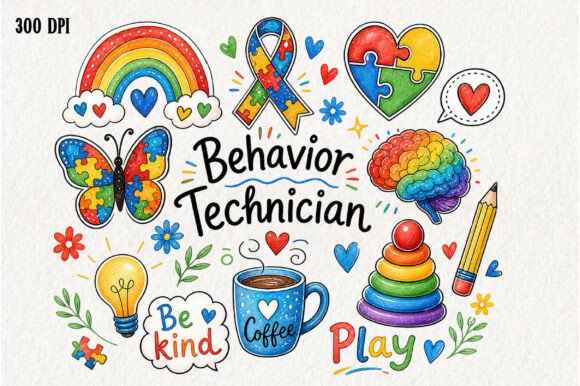
Behavior Technician Png: Autism Awareness Design Review
As a designer who has spent years navigating the intersection of digital graphics and physical stitching, I approach every new asset with a critical eye. The market is flooded with Graphics that look stunning on a screen but fall apart under the needle. Today, I am evaluating the Behavior Technician Png, Autism Awarenes design to see if it holds up for real-world application. This review isn't just about aesthetics; it is about understanding how this specific file translates into a tangible, high-quality finished product.
The First Impression: Visual Impact and Mood
When you first load the Behavior Technician Png, Autism Awarenes file, the immediate impression is one of clarity and purpose. As part of the Illustrations category, this piece carries a distinct visual personality that speaks directly to its intended audience. The design balances symbolic elements associated with autism awareness with professional motifs relevant to behavior technicians. It feels less like a generic clip-art and more like a badge of honor for those working in the field.
However, as an embroidery professional, my first thought is always about translation. A PNG file is raster-based, meaning it relies on pixels rather than vectors. While this is perfect for sublimation or printing, it presents a unique challenge for machine embroidery design. If you are planning to digitize this yourself, the resolution of the source image will dictate the success of your stitch density and the smoothness of your curves. The mood created here is supportive and professional, which is exactly what we want for custom apparel worn by therapists and advocates.
Real-World Application: From Screen to Fabric
Let’s talk about a practical scenario. Imagine you run a small Etsy shop specializing in gifts for special education professionals. You decide to create a line of embroidered tote bags featuring the Behavior Technician Png, Autism Awarenes design. Before committing to a bulk order, you must consider how the design behaves on fabric.
If you were to use this as a tote bag design, the canvas texture of the bag would interact with the fill stitch areas. Because the original file is a PNG intended for printing, the lines might be too thin for standard embroidery threads without significant adjustment. For a project like a sweatshirt embroidery or a heavy-duty apron, the design could work beautifully if re-digitized with thicker satin borders to ensure visibility from a distance. The visual weight of the design suggests it belongs on sturdy materials where the message needs to stand out clearly.
Consider also the potential for a personalized gift. A parent buying a baby embroidery item or a nursery decor piece for a child with autism would appreciate the sentiment. However, on delicate fabrics like jersey knit or thin cotton, the complexity of the design could lead to puckering. In these cases, using a lighter running stitch for outlines and minimizing dense fill areas becomes crucial. The design's versatility allows it to fit into various categories, from holiday embroidery projects to year-round commercial embroidery for clinics and schools.
Navigating the Limitations: What to Watch For
It is vital to address the elephant in the room: the file format. The product description explicitly states, "These PNG files were designed specifically for Sublimation projects or for printing... These are NOT SVG files." This is a critical distinction for any embroidery file user. You cannot simply drag and drop a PNG into most embroidery software and expect a clean result.
If you attempt to embroider this without proper digitization, you risk several issues:
- Small Hoop Sizes: Intricate details in the Behavior Technician Png, Autism Awarenes design may get lost or become muddy if forced into a 4x4 inch hoop. Larger hoops allow for better thread flow and detail retention.
- Textured Fabrics: On fabrics with a strong weave or texture, such as denim or fleece, fine lines in the design might not stitch cleanly. You may need to simplify the artwork.
- Stretchy Materials: Using this design on stretchy fabric requires a high-quality stabilizer. Without it, the tension of the stitches can distort the image, making the professional look unprofessional.
- Dark Fabric Backgrounds: While the design looks great on white, placing it on dark fabric requires careful consideration of thread colors and potentially adding a backing layer to prevent the base fabric from showing through.
Furthermore, detailed corners and tiny lettering are common pitfalls when converting raster images to stitches. If the design includes text, ensure the font size is large enough to remain legible after stitching. Tiny letters often turn into blobs of thread unless meticulously digitized.
Enhancing Value and Professionalism
For the Etsy seller or small shop product creator, the quality of your handmade product defines your brand. Using a well-executed version of the Behavior Technician Png, Autism Awarenes design can significantly boost customer trust and engagement. When a client sees a crisp, well-stitched patch or garment, they perceive higher value. Conversely, a poorly executed stitch job can damage your reputation.
This design has the potential to become a staple in your catalog of design assets. Whether you are creating an embroidered patch for a cap or a decorative accent on a pillow cover, the theme resonates deeply with a specific community. The emotional connection buyers feel toward autism awareness products means they are looking for quality. They want a personalized gift that honors their loved ones or their profession with dignity.
To maximize the appeal, consider how the design interacts with other elements. Does it work as a standalone statement on the chest of a shirt? Or does it serve better as a subtle logo on a sleeve? Testing the design in printable mockup scenarios before stitching helps visualize the final outcome. Compare light and dark fabric backgrounds to see how the contrast affects readability and impact.
Practical Designer Notes for Success
Before you commit to a production run, follow these steps to ensure the best results with this design:
- Test on Scrap Fabric: Never skip this step. Run a test stitch on a similar fabric to check for alignment and density issues.
- Check Thread Color Contrast: Ensure the chosen thread colors pop against the background fabric. High contrast improves legibility.
- Review Stitch Density: If digitizing manually, adjust the density to match the fabric weight. Too dense causes puckering; too sparse leaves gaps.
- Confirm Hoop Size: Make sure your machine's hoop can accommodate the full width of the design without cutting off edges.
- Inspect Small Details: Zoom in on the digitized file to ensure no tiny elements will fail during stitching.
- Use Proper Stabilizer: Invest in a good cutaway or tear-away stabilizer to support the fabric during the embroidery process.
- Verify Licensing: Always confirm the licensing terms before selling finished items. Ensure you have the right to use the design for commercial embroidery purposes.
In conclusion, the Behavior Technician Png, Autism Awarenes design offers a powerful visual statement that, when handled correctly, can elevate your craft business. While it starts as a raster graphic meant for printing, with the right digitization techniques and material choices, it can transform into a cherished embroidery project. By respecting the limitations of the file format and focusing on quality execution, you can create products that truly resonate with your customers and stand the test of time.