Cute Jellyfish Cartoon Character: Embroidery Review
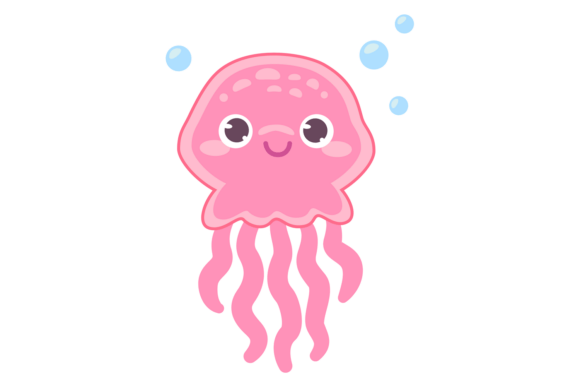
As a designer who has spent years translating digital art into tangible thread, I approach every new asset with a critical eye. When I first opened the file for Cute Jellyfish Cartoon Character. Funny, my immediate reaction was one of relief. In the world of Illustrations and Graphics, it is easy to find designs that look great on a screen but fall apart under the pressure of a needle. This particular underwater animal, isolated on a white background, strikes a rare balance between whimsical charm and structural integrity.
The design exudes a playful mood that feels perfectly suited for the current market trends in handmade goods. The jellyfish features a rounded, friendly face with expressive eyes that convey humor without being overly complex. For an embroidery project, this simplicity is a feature, not a bug. The lines are bold enough to hold their shape when stitched, avoiding the common pitfall of "muddy" details that often plague intricate cartoons when scaled down.
Bringing the Design to Life on Custom Apparel
To truly evaluate the potential of Cute Jellyfish Cartoon Character. Funny, I imagined a specific real-world scenario: creating a limited run of custom embroidered tote bags for a local boutique. These bags would be made from sturdy canvas, a fabric that holds stitches well but requires careful attention to density. The goal was to create a product that felt both professional and approachable—a perfect item for beach days or farmers' markets.
In this context, the jellyfish design shines. The large, open areas of the tentacles are ideal for fill stitch, allowing for smooth coverage that mimics the soft texture of the sea creature. The facial features, particularly the mouth and eyes, are well-defined, suggesting they could be executed with a crisp satin stitch to add dimension and pop against the canvas. Unlike some machine embroidery designs that rely on tiny, disconnected pixels that get lost in the weave of the fabric, this character maintains its personality even at moderate sizes.
I also considered how this would translate to custom apparel like sweatshirts. A sweatshirt embroidery project often demands a design that can withstand the texture of fleece or cotton blends. The Cute Jellyfish Cartoon Character. Funny works exceptionally well here because its silhouette is distinct. Even if the fabric has a slight nap, the contrast of the thread colors against the garment will ensure the character remains visible and engaging. It transforms a basic piece of clothing into a statement item that customers are likely to photograph and share on social media, driving organic engagement for any small business owner.
Navigating Fabric Challenges and Stitch Density
While the design is robust, no digital embroidery file is immune to the challenges of different materials. As a reviewer, I must advise caution when applying this design to certain surfaces. If you plan to use this for baby embroidery on thin muslin or delicate knitwear, the stitch density needs to be carefully managed. Too much fill stitch in the body of the jellyfish could cause puckering on lightweight fabrics, ruining the drape of the garment.
Furthermore, consider the implications of using this design on dark fabrics. Since the original graphic is isolated on a white background, stitching it directly onto navy blue or black material might require a significant amount of underlay or a backing layer to make the lighter thread colors stand out. Without proper stabilizer support, the design could lose its definition. Always test the design on scrap fabric first. Run a test hoop to see how the threads interact with your specific material before committing to a batch of finished products.
Curved surfaces present another consideration. If you are looking to create an embroidered patch for a cap or hat, the rounded nature of the jellyfish fits the geometry well. However, the tentacles extend outward, so you must ensure the hoop size accommodates the full width of the design. Attempting to fit the entire character into a 4x4 hoop might result in distorted proportions or missing elements. Check the dimensions of your embroidery file against your machine's capabilities to avoid frustration during production.
Commercial Viability and Brand Consistency
For the Etsy seller or creative entrepreneur, the commercial viability of a design extends beyond just how it looks; it is about how it makes the customer feel. Cute Jellyfish Cartoon Character. Funny taps into a universal love for ocean life and cute aesthetics, making it a versatile asset for various holiday gifts or seasonal collections. Imagine this design on a kitchen towel for a summer sale or on a pillow cover for a nursery theme. Its broad appeal increases the likelihood of sales across different demographics.
However, brand consistency is key. Before integrating this into your craft business line, ensure the color palette aligns with your existing brand identity. While the design allows for flexibility in thread colors, sticking to a cohesive scheme will elevate the perceived value of your handmade product. A mismatched colorway can make even the best design look amateurish. Use printable mockups to visualize how the final embroidery will look in different color combinations before purchasing thread.
Additionally, always confirm the licensing terms associated with the Graphics file. If you intend to sell physical items featuring this jellyfish, ensure the license permits commercial embroidery usage. Some design assets are restricted to personal use only, which could lead to legal complications down the road. Protect your business by verifying these details upfront.
Final Verdict for the Practical Designer
After analyzing the layout, detail level, and potential applications, Cute Jellyfish Cartoon Character. Funny earns a strong recommendation for designers seeking reliable, high-impact imagery. It avoids the trap of over-complication while offering enough visual interest to capture attention. Whether you are creating a personalized gift for a friend or launching a new line of small shop products, this design provides a solid foundation.
Remember to review the stitch count provided in the file specifications to estimate production time accurately. Compare light and dark fabric backgrounds to determine the best placement strategy. By taking these practical steps, you ensure that the final result is as polished and professional as the digital preview suggests. In the competitive world of handmade decor and apparel, choosing a design that translates seamlessly from screen to stitch is half the battle won.