Whimsical Happy Easter Clipart Review
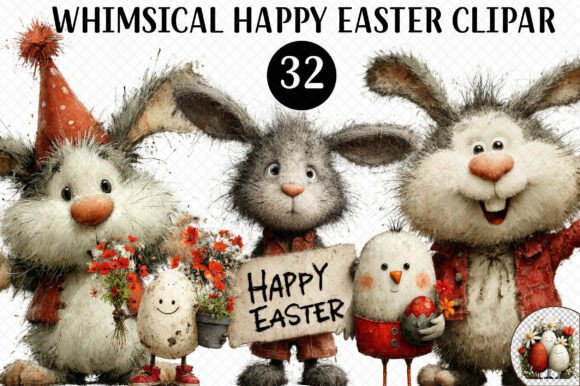
As a designer who has spent years navigating the fine line between digital art and tangible thread, I approach every new asset with a critical eye. When I first encountered Whimsical Happy Easter Clipar, my immediate reaction was one of cheerful curiosity. The title suggests a lighthearted, festive aesthetic, which is exactly what the season demands. However, before I could envision this on a finished product, I had to pause and analyze the technical reality. The description clearly states these are PNG files designed specifically for sublimation or printing, and explicitly notes they are not SVG files and are not layered. This distinction is crucial for anyone in the embroidery business.
The Designer's Dilemma: Print vs. Stitch
Let's be honest about the workflow. In my studio, I often juggle multiple techniques to meet client deadlines. If you are an Etsy seller or a small shop owner looking for a quick turnaround, the appeal of Whimsical Happy Easter Clipar lies in its visual clarity as a Graphic. For sublimation projects, these files shine. Imagine transferring this design onto a white ceramic mug or a polyester tote bag. The vibrant colors and whimsical lines translate perfectly through heat transfer, creating a crisp, professional look that customers love for holiday gifts.
However, if your primary goal is machine embroidery design, we need to have a serious conversation about conversion. You cannot simply load a PNG into your embroidery software and expect it to stitch out beautifully. Unlike vector-based embroidery files, raster images like these do not contain the mathematical data needed to define stitch paths, fill stitch density, or satin stitch widths. To use this image for stitching, you would need to digitize it from scratch. This process involves tracing the outlines, defining underlays, and setting pull compensation. While the source art is charming, the effort required to turn it into a functional digital embroidery file is significant.
Visualizing the Finished Product
Despite the format limitation, let's imagine we have successfully digitized the artwork. How would Whimsical Happy Easter Clipar perform on real-world items? The whimsical nature of the illustration suggests it would work exceptionally well on soft goods where a playful vibe is essential. Picture a custom embroidered tote bag design for a spring craft fair. The organic shapes of the clipart would likely soften the rigid structure of a canvas bag, making it feel more handmade and personal.
I can also see this working beautifully on custom apparel, particularly children's wear. A baby embroidery project, such as a onesie or a nursery pillow cover, benefits from the bright, friendly mood of the design. Parents often seek unique, non-generic patterns for their nurseries, and this Illustration offers a fresh alternative to standard bunnies and eggs. If applied to a sweatshirt embroidery project, perhaps on the chest pocket area, the design would add a touch of seasonal flair without overwhelming the garment. The key here is placement; because the design is likely detailed, it needs space to breathe.
Navigating Fabric Textures and Hoop Sizes
When moving from screen to fabric, the devil is in the details. If you decide to digitize this for an embroidered patch or a cap, you must consider the curvature of the surface. Whimsical designs often feature intricate corners and flowing lines. On a curved surface like a baseball cap, tight curves can cause puckering or registration issues if the stitch density is too high. I always recommend testing the design on scrap fabric first, especially when dealing with textured materials like denim or fleece.
Fabric texture plays a massive role in how the final piece is perceived. On a smooth cotton poplin, the thread colors will pop, and the definition of the running stitch outlining the whimsical elements will be sharp. Conversely, on a thick towel or a heavy knit, the details might get lost. If you are creating a kitchen towel or an apron, ensure the hoop size is large enough to capture the entire composition without distorting the edges. Using the correct stabilizer is non-negotiable here; a tear-away might not provide enough support for the density required to render the clipart faithfully, whereas a cut-away would offer better longevity for items that need frequent washing.
Practical Advice for Small Business Owners
For the craft business owner, time is money. Before committing to a full production run, ask yourself if the value of the finished product justifies the hours spent digitizing a PNG. If you are selling personalized gifts, the uniqueness of the design adds value, but only if the execution is flawless. Customers trust brands that deliver consistent quality. A poorly stitched design with broken threads or muddy colors can damage your reputation faster than a lack of inventory.
If you choose to proceed, treat this as a test case. Create a black and white mockup first to evaluate the contrast and flow of the lines. Check whether the design works on both light and dark fabric backgrounds. Sometimes, a design that looks great on white paper requires significant color adjustments to stand out against navy blue or charcoal gray fabric. Also, confirm licensing terms before selling finished items. Even though the source is a digital download, commercial rights vary, and you want to ensure your commercial embroidery projects are fully protected.
Final Thoughts on Design Assets
Whimsical Happy Easter Clipar is a delightful asset for those working in sublimation and print-on-demand markets. It captures the joy of the season perfectly. For the embroidery enthusiast, it serves as excellent inspiration or a starting point for a custom digitization project. However, it is not a plug-and-play embroidery file. It requires skill, patience, and the right equipment to transform from a static image into a tactile, three-dimensional masterpiece.
Whether you are preparing a boutique product for a holiday sale or creating a one-of-a-kind gift for a friend, the success of the project depends on understanding the medium. By respecting the limitations of the file format and leveraging the strengths of the design, you can create a finished product that delights your customers and elevates your brand. Remember, the best design assets are those that fit seamlessly into your specific workflow and enhance the story you tell through your craft.